 EN
EN

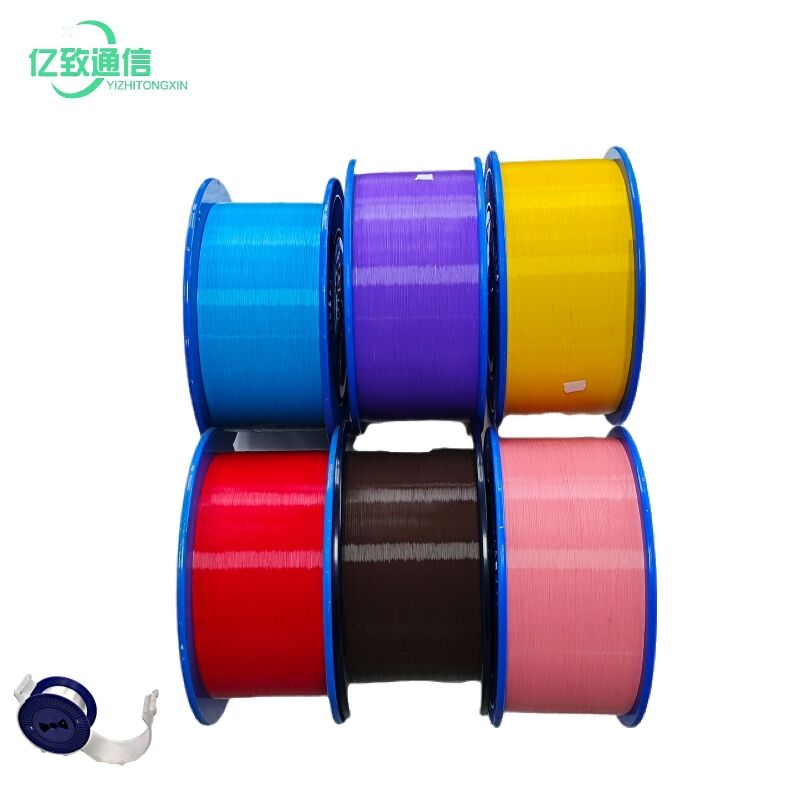
Modern telecommunications infrastructure relies heavily on sophisticated fiber optic equipment to deliver high-speed data transmission across vast networks. Understanding transmission standards becomes crucial when sourcing fiber optic equipment for enterprise deployments, data centers, or telecommunications providers. These standards determine compatibility, performance capabilities, and long-term operational efficiency of your network infrastructure investments.
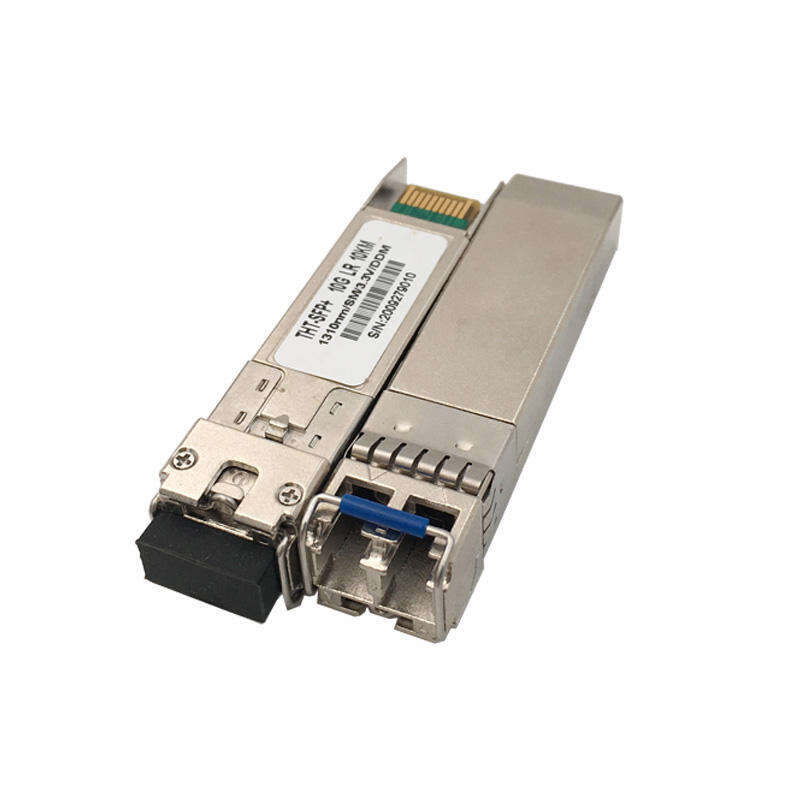
The complexity of fiber optic equipment selection extends beyond basic connectivity requirements. Network architects must evaluate multiple transmission standards that govern everything from wavelength specifications to power consumption parameters. Making informed decisions about these standards directly impacts network scalability, maintenance costs, and future upgrade pathways for your telecommunications infrastructure.
Understanding Core Transmission Standards
Ethernet Standards for Fiber Networks
Ethernet transmission standards form the backbone of most fiber optic equipment deployments in enterprise and carrier networks. The IEEE 802.3 family defines critical specifications including 10 Gigabit Ethernet, 25 Gigabit Ethernet, 40 Gigabit Ethernet, and 100 Gigabit Ethernet variants. Each standard specifies unique requirements for fiber optic equipment including reach distances, power budgets, and wavelength allocations that directly influence sourcing decisions.
When evaluating fiber optic equipment against Ethernet standards, consider the specific PHY layer implementations such as 10GBASE-SR, 10GBASE-LR, and 10GBASE-ER. These designations indicate whether your equipment supports short-reach multimode fiber, long-reach single-mode fiber, or extended-reach applications respectively. Understanding these distinctions helps procurement teams select appropriate transceiver modules and optical components for their specific deployment scenarios.
Higher-speed Ethernet standards like 40GBASE-SR4 and 100GBASE-SR10 introduce parallel optics configurations that require specialized fiber optic equipment capable of handling multiple fiber strands simultaneously. These standards demand more sophisticated optical multiplexing technologies and precise wavelength management within your equipment selection criteria.
SONET and SDH Legacy Standards
Synchronous Optical Network and Synchronous Digital Hierarchy standards remain relevant for many telecommunications providers managing legacy infrastructure alongside modern packet-switched networks. SONET/SDH defines hierarchical transmission rates from OC-3 through OC-768, with corresponding fiber optic equipment requirements for each optical carrier level.
Modern fiber optic equipment must often support dual-mode operations accommodating both legacy SONET/SDH traffic and contemporary Ethernet protocols. This compatibility requirement influences transceiver selection, timing recovery mechanisms, and forward error correction capabilities within your sourcing specifications.
The transition from SONET/SDH to packet-based transmission doesn't eliminate the need for understanding these standards. Many fiber optic equipment vendors continue supporting SONET/SDH interfaces for seamless network migration scenarios, making standard comprehension essential for comprehensive sourcing strategies.
Wavelength Division Multiplexing Standards
Coarse Wavelength Division Multiplexing
CWDM standards define wavelength grids spanning 1270nm to 1610nm with 20nm channel spacing, enabling cost-effective capacity expansion in metropolitan and access networks. Fiber optic equipment supporting CWDM standards typically offers eight to eighteen wavelength channels without requiring optical amplification for distances up to 80 kilometers.
Temperature-stable operation represents a critical consideration when sourcing CWDM-compatible fiber optic equipment. Uncooled laser technologies reduce power consumption and operational costs while maintaining wavelength stability across industrial temperature ranges. These characteristics make CWDM standards particularly attractive for outdoor installations and cost-sensitive deployments.
Integration flexibility becomes paramount when selecting fiber optic equipment for CWDM applications. Equipment must accommodate various client interfaces while providing standardized optical outputs compatible with passive CWDM multiplexing components throughout your network infrastructure.
Dense Wavelength Division Multiplexing
DWDM standards enable significantly higher capacity fiber optic equipment deployments through precise wavelength control and narrow channel spacing typically at 50GHz or 100GHz intervals. ITU-T G.694.1 defines the standard wavelength grid covering C-band and L-band spectrum allocations for long-haul and ultra-long-haul transmission systems.
Advanced fiber optic equipment supporting DWDM standards incorporates sophisticated dispersion management, optical signal-to-noise ratio optimization, and chromatic dispersion compensation capabilities. These features require careful evaluation during sourcing processes to ensure compatibility with existing amplification chains and transmission spans.
Coherent detection technologies increasingly dominate high-capacity DWDM fiber optic equipment, enabling advanced modulation formats like QPSK, 16-QAM, and 64-QAM. Understanding these modulation standards helps procurement teams specify appropriate equipment for different reach and capacity requirements across their network infrastructure.
Physical Layer Standards and Specifications
Connector and Interface Standards
Physical connectivity standards significantly impact fiber optic equipment interoperability and field deployment efficiency. SC, LC, and MPO/MTP connector families each offer distinct advantages depending on port density requirements, insertion loss specifications, and mechanical durability considerations for different application environments.
LC connector standards have gained widespread adoption in high-density fiber optic equipment applications due to their compact footprint and excellent optical performance characteristics. Understanding LC connector variants including UPC and APC polish types helps ensure proper impedance matching and return loss performance in your equipment selections.
MPO/MTP connector standards enable parallel optics configurations essential for high-speed fiber optic equipment supporting 40 Gigabit and 100 Gigabit Ethernet applications. These multi-fiber connectors require precise alignment and polarity management, making standard compliance verification crucial during equipment sourcing and deployment phases.
Fiber Type and Modal Standards
Single-mode and multimode fiber standards define critical transmission characteristics that directly influence fiber optic equipment performance and reach capabilities. ITU-T G.652 through G.657 standards specify various single-mode fiber categories optimized for different wavelength ranges and bending sensitivity requirements.
Multimode fiber standards including OM3, OM4, and OM5 categories provide different modal bandwidth and reach capabilities affecting fiber optic equipment selection for data center and campus network applications. Understanding these specifications helps optimize equipment choices for specific link budgets and transmission distances.
Bend-insensitive fiber standards like G.657 categories enable more flexible fiber optic equipment installations in space-constrained environments. Equipment compatibility with these specialized fiber types expands deployment options while maintaining transmission performance standards.
Power and Environmental Standards
Power Consumption Classifications
Energy efficiency standards increasingly influence fiber optic equipment sourcing decisions as operators seek to reduce operational expenses and environmental impact. Understanding power consumption classifications helps evaluate total cost of ownership across different equipment options and deployment scenarios.
Modern fiber optic equipment incorporates advanced power management features including dynamic power scaling, sleep mode operations, and intelligent thermal management systems. These capabilities require evaluation against specific power consumption standards relevant to your deployment environment and operational requirements.
Hot-pluggable transceiver modules within fiber optic equipment must comply with MSA power consumption limits while delivering required optical performance levels. Balancing power efficiency with transmission reach and capacity represents a critical optimization challenge during equipment sourcing processes.
Environmental and Reliability Standards
Operating temperature ranges, humidity tolerance, and vibration resistance standards significantly impact fiber optic equipment suitability for different deployment environments. Industrial-grade equipment must meet more stringent environmental specifications compared to controlled data center applications.
Mean Time Between Failures and Mean Time To Repair metrics provide quantitative reliability comparisons across different fiber optic equipment options. Understanding these standards helps evaluate long-term operational costs and service level agreement compliance capabilities.
Electromagnetic compatibility standards ensure fiber optic equipment operates reliably in environments with significant electromagnetic interference. Compliance verification becomes particularly important for equipment deployed near power transmission lines or industrial facilities with heavy electrical machinery.
Future-Proofing Through Standards Compliance
Emerging Transmission Standards
Next-generation transmission standards including 400 Gigabit Ethernet and 800 Gigabit Ethernet drive fiber optic equipment evolution toward higher speeds and greater spectral efficiency. Early adoption considerations must balance cutting-edge performance capabilities with standards maturity and ecosystem availability.
Coherent optics integration into shorter-reach applications represents a significant trend affecting fiber optic equipment development. Understanding emerging coherent standards helps procurement teams prepare for technology transitions while maximizing current equipment investments.
Artificial intelligence and machine learning integration into fiber optic equipment enables autonomous network optimization and predictive maintenance capabilities. These advanced features require evaluation against emerging standards for network management and automation interfaces.
Backward Compatibility Considerations
Maintaining interoperability with legacy systems represents a crucial consideration when sourcing modern fiber optic equipment. Standards-based approaches ensure smooth migration paths while preserving existing infrastructure investments and operational continuity.
Multi-rate and multi-protocol capabilities within fiber optic equipment provide flexibility for networks transitioning between different transmission standards. Understanding these compatibility features helps optimize equipment selection for heterogeneous network environments.
Software-defined networking integration requires fiber optic equipment supporting standardized control plane interfaces and programmable data plane capabilities. These features enable dynamic network reconfiguration and service provisioning across multi-vendor equipment deployments.
FAQ
What are the most critical transmission standards for modern fiber optic equipment deployments
The most critical transmission standards for contemporary fiber optic equipment include IEEE 802.3 Ethernet variants (10G, 25G, 40G, 100G), ITU-T wavelength division multiplexing standards (CWDM and DWDM), and emerging 400G Ethernet specifications. These standards determine compatibility, performance, and future upgrade capabilities across your network infrastructure investments.
How do wavelength standards affect fiber optic equipment sourcing decisions
Wavelength standards directly impact fiber optic equipment selection through reach limitations, capacity scalability, and interoperability requirements. CWDM standards offer cost-effective solutions for shorter distances, while DWDM standards enable higher capacity long-haul applications. Understanding these distinctions helps optimize equipment choices for specific network segments and performance requirements.
Why do connector standards matter in fiber optic equipment procurement
Connector standards significantly influence fiber optic equipment deployment efficiency, port density capabilities, and long-term maintenance costs. LC connectors provide high-density solutions for data centers, while MPO/MTP connectors enable parallel optics for high-speed applications. Proper connector standard selection ensures seamless integration and optimal optical performance across your network infrastructure.
How should environmental standards influence fiber optic equipment selection
Environmental standards determine fiber optic equipment suitability for different deployment conditions including temperature ranges, humidity levels, and electromagnetic interference exposure. Industrial deployments require equipment meeting more stringent environmental specifications, while controlled environments enable broader equipment options. Understanding these standards helps ensure reliable operation and minimize maintenance requirements across diverse installation scenarios.
Table of Contents
- Understanding Core Transmission Standards
- Wavelength Division Multiplexing Standards
- Physical Layer Standards and Specifications
- Power and Environmental Standards
- Future-Proofing Through Standards Compliance
-
FAQ
- What are the most critical transmission standards for modern fiber optic equipment deployments
- How do wavelength standards affect fiber optic equipment sourcing decisions
- Why do connector standards matter in fiber optic equipment procurement
- How should environmental standards influence fiber optic equipment selection