 EN
EN

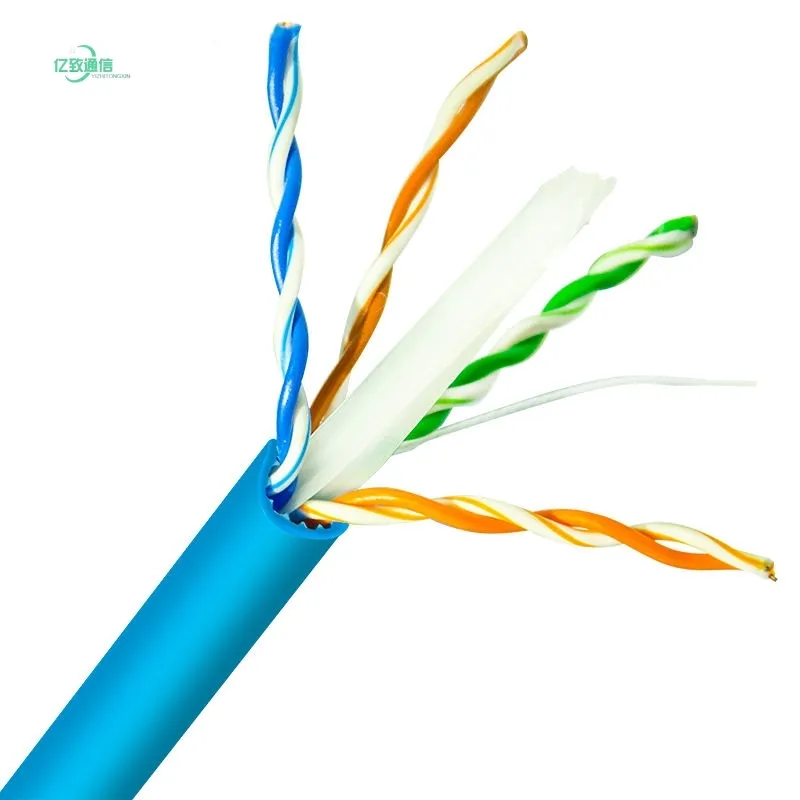
Network infrastructure performance in enterprise and telecom environments depends heavily on the quality and specifications of network cables. These critical components form the backbone of data transmission systems, directly influencing bandwidth capacity, signal integrity, and overall network reliability. Modern businesses require robust network cables that can handle increasing data demands while maintaining consistent performance across complex network topologies. Understanding the impact of network cables on system performance enables organizations to make informed decisions about their infrastructure investments and avoid costly performance bottlenecks.
Cable Categories and Performance Specifications
Understanding Category Standards
The performance characteristics of network cables are defined by category standards that specify bandwidth, frequency response, and transmission capabilities. Category 5e cables support up to 1 Gigabit Ethernet at 100 MHz, while Category 6 cables extend this to 250 MHz with improved crosstalk performance. Category 6a network cables represent a significant advancement, supporting 10 Gigabit Ethernet over 100 meters at frequencies up to 500 MHz. These specifications directly correlate with the maximum data rates and distances achievable in enterprise network deployments.
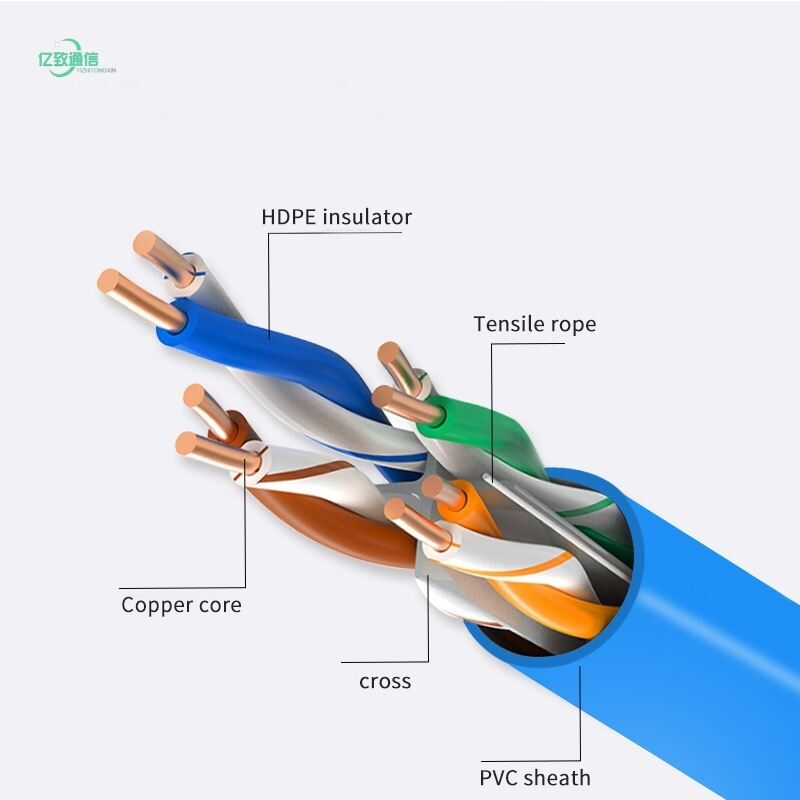
Higher category network cables incorporate advanced construction techniques including improved shielding, tighter cable geometry, and enhanced insulation materials. The physical design differences between categories affect signal attenuation, near-end crosstalk (NEXT), and alien crosstalk (AXT) performance. Organizations selecting network cables must balance current bandwidth requirements with future scalability needs to ensure long-term infrastructure viability.
Shielding Technologies and Applications
Shielded network cables provide superior electromagnetic interference (EMI) protection in challenging environments where unshielded cables may experience performance degradation. Foiled twisted pair (FTP) and shielded twisted pair (STP) configurations offer different levels of protection against external interference sources. Industrial facilities, data centers, and telecom installations frequently require shielded network cables to maintain signal integrity near high-powered equipment and electrical systems.
The selection between shielded and unshielded network cables depends on environmental factors, installation requirements, and performance expectations. Proper grounding techniques become critical when implementing shielded network cables, as improper grounding can actually increase noise and degrade performance. Network designers must evaluate electromagnetic environments and potential interference sources when specifying cable shielding requirements.
Impact on Data Transmission Quality
Signal Attenuation and Loss Characteristics
Signal attenuation represents one of the most significant factors affecting network cables performance over distance. As electrical signals travel through copper conductors, they experience power loss that increases with frequency and cable length. High-quality network cables minimize attenuation through precise conductor sizing, advanced insulation materials, and optimized cable geometry. Understanding attenuation characteristics helps network engineers determine maximum cable runs and predict signal strength at receiver endpoints.
Temperature variations, cable routing, and installation practices all influence attenuation performance in deployed network cables. Excessive bending, compression, or exposure to extreme temperatures can increase signal loss beyond manufacturer specifications. Proper installation techniques and environmental controls help maintain the designed attenuation characteristics of network cables throughout their operational lifetime.
Crosstalk Prevention and Signal Isolation
Crosstalk occurs when signals in adjacent wire pairs within network cables interfere with each other, potentially causing data errors and performance degradation. Advanced network cables employ precise twist rates, pair separation techniques, and shielding methods to minimize both near-end crosstalk (NEXT) and far-end crosstalk (FEXT). The alien crosstalk (AXT) specification becomes particularly important in high-density installations where multiple cables run in close proximity.
Modern network cables incorporate sophisticated design features to maintain signal isolation even in challenging installation environments. Proper cable management practices, including maintaining appropriate separation distances and avoiding parallel runs with power cables, complement the inherent crosstalk performance of high-quality network cables. These factors collectively determine the maximum achievable data rates and error-free transmission distances.
Enterprise Network Performance Considerations
Bandwidth Requirements and Scalability
Enterprise networks face continuously increasing bandwidth demands as applications become more data-intensive and user populations grow. Network cables must support not only current traffic requirements but also provide headroom for future expansion without requiring complete infrastructure replacement. Organizations implementing 10 Gigabit Ethernet, Power over Ethernet (PoE), and emerging technologies require network cables that can handle these advanced applications reliably.
The selection of appropriate network cables directly impacts the maximum achievable network speeds and the longevity of infrastructure investments. Upgrading network equipment to support higher speeds becomes ineffective if existing network cables cannot handle the increased bandwidth requirements. Forward-thinking organizations often specify higher-category network cables during initial installations to support future technology migrations without costly recabling projects.
Power Delivery and PoE Applications
Power over Ethernet applications place additional demands on network cables beyond traditional data transmission requirements. The conductor gauge, insulation properties, and thermal characteristics of network cables determine their ability to safely deliver power while maintaining data integrity. Higher-powered PoE+ and PoE++ applications require network cables specifically designed to handle increased current levels without overheating or performance degradation.
The bundling of network cables carrying PoE can create thermal management challenges that affect both power delivery capacity and data transmission performance. Proper derating calculations and installation practices ensure that network cables can simultaneously support power and data requirements without exceeding temperature limits. These considerations become critical in high-density installations where multiple PoE devices draw power through bundled network cables.
Telecom Infrastructure Applications
Carrier-Grade Performance Requirements
Telecommunications service providers require network cables that meet stringent performance and reliability standards for carrier-grade applications. These environments demand network cables capable of supporting high-speed data services, voice communications, and emerging 5G backhaul applications with minimal downtime. The selection criteria for telecom network cables include enhanced mechanical properties, environmental resistance, and extended temperature operating ranges.
Telecom installations often involve outdoor environments, underground conduits, and aerial deployments that subject network cables to harsh conditions including moisture, temperature extremes, and mechanical stress. Specialized network cables designed for these applications incorporate enhanced jacketing materials, flooding compounds, and reinforcement elements to maintain performance throughout their design lifetime. Reliability becomes paramount as service outages can affect thousands of customers and result in significant revenue losses.
High-Density Installation Challenges
Telecommunications facilities frequently require high-density network cables installations to support large numbers of connections within limited space constraints. These environments create unique challenges including thermal management, electromagnetic compatibility, and maintenance accessibility. The selection of network cables must consider not only individual cable performance but also the collective behavior of hundreds or thousands of cables in close proximity.
Cable management systems and installation practices become critical factors in maintaining the designed performance of network cables in high-density applications. Proper airflow management, cable routing techniques, and systematic labeling help ensure that network cables perform optimally even in crowded equipment rooms and central offices. The physical properties of network cables, including bend radius specifications and pulling tension limits, influence installation feasibility and long-term reliability.
Performance Testing and Validation
Field Testing Methodologies
Comprehensive testing of installed network cables ensures that they meet performance specifications and can support intended applications reliably. Standard test procedures evaluate parameters including wire map configuration, length measurements, attenuation, crosstalk, and return loss across the specified frequency range. Professional cable testers provide detailed analysis of network cables performance and identify potential issues that could affect network operation.
The testing process for network cables must account for installation effects that may impact performance beyond manufacturer specifications. Factors such as connector quality, termination techniques, and cable routing can introduce performance variations that require field verification. Systematic testing protocols help validate that installed network cables will support intended data rates and applications without error-inducing impairments.
Troubleshooting Performance Issues
Network performance problems often trace back to issues with network cables, making diagnostic capabilities essential for maintaining system reliability. Common problems include improper terminations, cable damage, environmental effects, and compatibility issues between different cable categories or manufacturers. Advanced test equipment can isolate specific performance parameters and identify the root causes of network cables-related problems.
Preventive maintenance programs for network cables help identify potential problems before they impact network performance. Regular inspection, testing, and documentation of network cables conditions enable proactive replacement and maintenance scheduling. Understanding the relationship between environmental conditions and network cables performance helps organizations optimize their infrastructure management practices and extend cable lifetime.
Future Technology Compatibility
Emerging Standards and Requirements
The evolution of networking technologies continues to drive increased performance requirements for network cables. Emerging standards such as 25 Gigabit Ethernet, 40 Gigabit Ethernet, and advanced PoE specifications require network cables with enhanced electrical characteristics and thermal performance. Organizations must consider future technology roadmaps when selecting network cables to ensure compatibility with next-generation equipment and applications.
The development of Category 8 network cables represents the latest advancement in copper-based networking infrastructure, supporting up to 40 Gigabit Ethernet over short distances. While fiber optic solutions dominate long-distance high-speed applications, advanced copper network cables remain essential for device connectivity, access layer implementations, and specialized applications requiring power delivery capabilities. The selection between different network cables technologies depends on specific application requirements, distance limitations, and cost considerations.
Investment Protection Strategies
Strategic planning for network cables investments requires balancing current requirements with future technology migration paths. Over-specifying network cables provides protection against obsolescence but may increase initial costs unnecessarily. Under-specifying network cables can result in premature replacement requirements and higher total cost of ownership. Effective infrastructure planning considers technology lifecycles, performance growth trajectories, and budget constraints to optimize network cables selection decisions.
The modular nature of modern network infrastructure allows organizations to upgrade network equipment independently from network cables infrastructure in many cases. This approach enables incremental performance improvements while preserving investments in high-quality network cables installations. Understanding the compatibility boundaries between different technology generations helps organizations maximize the value of their network cables investments while maintaining upgrade flexibility.
FAQ
What factors determine the maximum performance of network cables in enterprise environments
The maximum performance of network cables depends on several interconnected factors including cable category specifications, installation quality, environmental conditions, and system design. Higher category network cables support greater bandwidth and longer transmission distances, while proper installation techniques ensure that cables achieve their rated performance. Environmental factors such as temperature, electromagnetic interference, and physical stress can degrade performance below specification limits. System-level considerations including connector quality, patch panel design, and cable management practices also influence overall network cables performance.
How do shielded network cables compare to unshielded versions in terms of performance
Shielded network cables provide superior electromagnetic interference protection compared to unshielded versions, making them essential in environments with high EMI levels such as industrial facilities and data centers. However, shielded network cables require proper grounding techniques and may have higher installation costs. The performance advantage of shielded network cables becomes most apparent in applications involving long cable runs, high-density installations, or proximity to electrical equipment. Unshielded network cables offer adequate performance for most office environments while providing cost and installation simplicity advantages.
What role do network cables play in Power over Ethernet applications
Network cables in PoE applications must simultaneously support data transmission and power delivery, which creates unique performance requirements. The conductor gauge and thermal characteristics of network cables determine their power-carrying capacity, while maintaining data integrity requires adherence to standard electrical specifications. High-power PoE applications may require derating calculations to account for thermal effects in bundled cable installations. Quality network cables designed for PoE applications incorporate features to handle increased current levels safely while preserving signal quality throughout the specified temperature range.
How can organizations ensure their network cables will support future technology upgrades
Organizations can future-proof their network cables infrastructure by selecting higher-category cables that exceed current requirements, implementing structured cabling systems that support modular upgrades, and following industry best practices for installation and documentation. Choosing network cables with proven compatibility across multiple technology generations helps protect infrastructure investments. Regular performance testing and maintenance of network cables ensures they continue meeting specifications as system requirements evolve. Strategic planning should consider technology roadmaps, application growth projections, and infrastructure lifecycles to optimize network cables selection decisions.
Table of Contents
- Cable Categories and Performance Specifications
- Impact on Data Transmission Quality
- Enterprise Network Performance Considerations
- Telecom Infrastructure Applications
- Performance Testing and Validation
- Future Technology Compatibility
-
FAQ
- What factors determine the maximum performance of network cables in enterprise environments
- How do shielded network cables compare to unshielded versions in terms of performance
- What role do network cables play in Power over Ethernet applications
- How can organizations ensure their network cables will support future technology upgrades