 EN
EN

Modern communication networks rely heavily on advanced transmission technologies to deliver data across vast distances with minimal signal degradation. Among these technologies, fiber optical cables have emerged as the backbone of global telecommunications infrastructure, enabling high-speed data transmission across continents. These sophisticated cables utilize light pulses to carry information through thin glass or plastic fibers, offering unprecedented bandwidth capabilities and reliability for long-distance communication systems.
The fundamental principle behind optical fiber communication involves converting electrical signals into light waves that travel through specially designed glass fibers. This process enables data transmission at the speed of light while maintaining signal integrity over tremendous distances. Unlike traditional copper-based transmission media, optical fibers experience minimal electromagnetic interference and can maintain signal quality across thousands of kilometers without significant amplification requirements.
Technical Principles of Optical Fiber Communication
Light Propagation and Total Internal Reflection
The core technology behind fiber optical cables operates on the principle of total internal reflection. When light travels through the fiber core, which has a higher refractive index than the surrounding cladding material, it bounces repeatedly off the core-cladding boundary. This phenomenon ensures that light signals remain confined within the fiber core throughout their journey, preventing signal loss and maintaining data integrity over extended distances.
The precise manufacturing of optical fibers involves creating extremely pure glass with specific refractive index profiles. The core diameter typically ranges from 8 to 62.5 micrometers, while the cladding extends to approximately 125 micrometers. This microscopic precision enables optimal light guidance and minimizes signal attenuation, making long-distance communication feasible without frequent signal regeneration.
Wavelength Division Multiplexing Technology
Advanced fiber optical cables support wavelength division multiplexing, a technique that allows multiple data streams to travel simultaneously through a single fiber. By using different wavelengths of light, telecommunications providers can dramatically increase the transmission capacity of their networks. Common wavelengths used in optical communication include 850nm, 1310nm, and 1550nm, each optimized for specific transmission characteristics and distance requirements.
Dense wavelength division multiplexing systems can accommodate hundreds of separate wavelength channels within a single optical fiber. This capability transforms a single fiber into a massive data highway capable of handling terabits of information per second. The technology has revolutionized long-distance communication by enabling service providers to meet ever-increasing bandwidth demands without laying additional physical infrastructure.
Advantages Over Traditional Communication Media
Signal Attenuation and Distance Capabilities
Fiber optical cables demonstrate superior performance characteristics compared to conventional copper-based transmission systems. The attenuation in high-quality optical fibers can be as low as 0.2 decibels per kilometer at optimal wavelengths, allowing signals to travel distances exceeding 100 kilometers without amplification. This low loss characteristic makes optical fibers ideal for transcontinental communication links and submarine cable systems.
Traditional copper cables experience significant signal degradation over much shorter distances, typically requiring signal regeneration every few kilometers for high-speed applications. The superior distance capabilities of optical fibers reduce infrastructure complexity and operational costs for long-haul communication networks. Additionally, the immunity to electromagnetic interference ensures consistent signal quality regardless of environmental conditions or proximity to electrical equipment.
Bandwidth and Data Capacity
The bandwidth capacity of fiber optical cables far exceeds that of any other transmission medium currently available. A single optical fiber can theoretically support bandwidth in the terahertz range, though practical systems typically operate in the gigahertz to hundreds of gigahertz range. This enormous capacity enables the simultaneous transmission of voice, data, and video services over the same physical infrastructure.
Modern fiber optic systems can achieve data rates of 100 gigabits per second and higher over single wavelength channels. When combined with wavelength division multiplexing technologies, the aggregate capacity of a single fiber can reach multiple terabits per second. This scalability ensures that fiber optical cables can accommodate future bandwidth growth without requiring complete infrastructure replacement.
Implementation in Long-Distance Networks
Submarine Cable Systems
Intercontinental communication relies extensively on submarine fiber optical cable systems that span ocean floors connecting continents. These specialized cables incorporate multiple layers of protection including steel wire armor, copper conductors for remote powering, and hermetic sealing to prevent water ingress. Submarine fiber optical cables can extend over 10,000 kilometers between regeneration points, enabling direct connectivity between distant continents.
The deployment of submarine fiber optical cables involves sophisticated installation techniques using specialized cable-laying vessels. These systems must withstand extreme ocean pressures, temperature variations, and potential damage from fishing activities or natural disasters. Advanced monitoring systems continuously assess cable performance and detect any degradation that might affect communication reliability.
Terrestrial Long-Haul Networks
Land-based long-distance networks utilize fiber optical cables installed through various methods including underground burial, aerial installation, and placement within existing utility corridors. These networks form the backbone of national and international communication infrastructure, connecting major metropolitan areas and enabling high-capacity data exchange between regions.
Terrestrial fiber optical cable installations typically incorporate optical amplifiers at regular intervals to compensate for signal attenuation over long distances. Erbium-doped fiber amplifiers have become the standard technology for signal regeneration, providing gain across the entire C-band wavelength range commonly used in long-haul communication systems. These amplifiers enable continuous signal transmission over thousands of kilometers without electrical regeneration.
Quality Factors and Performance Optimization
Material Purity and Manufacturing Standards
The performance of fiber optical cables depends critically on the purity of materials used in their construction. Ultra-pure silica glass with impurity levels measured in parts per billion ensures minimal absorption losses and optimal transmission characteristics. Manufacturing processes must maintain strict quality control to prevent defects that could compromise signal integrity or reduce the operational lifespan of the cables.
Advanced manufacturing techniques include modified chemical vapor deposition and outside vapor deposition methods that create precise refractive index profiles within the optical fiber. These processes ensure consistent fiber geometry and optical properties across entire production runs. Quality testing during manufacturing includes measurements of attenuation, bandwidth, numerical aperture, and mechanical strength to verify compliance with international standards.
Environmental Protection and Durability
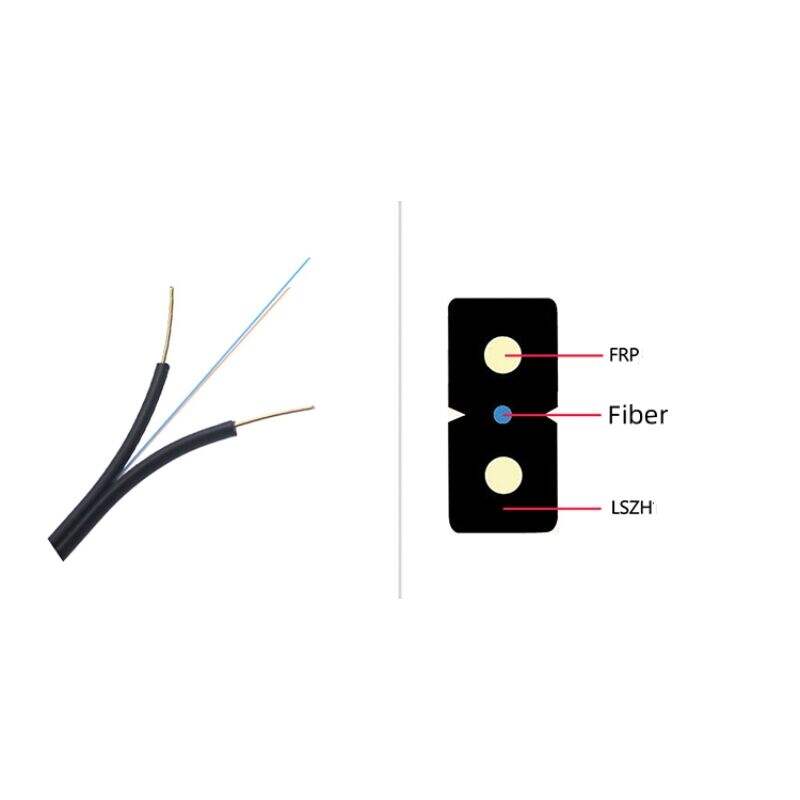
Long-distance fiber optical cables require robust protective structures to withstand environmental challenges throughout their operational lifetime. Cable designs incorporate multiple layers of protection including buffer tubes, strength members, and outer jackets designed to resist moisture, temperature extremes, and mechanical stress. These protective elements ensure reliable operation in diverse environmental conditions.
Specialized cable designs address specific environmental requirements such as direct burial applications, aerial installations, and harsh industrial environments. UV-resistant materials protect against solar radiation degradation, while rodent-resistant armoring prevents damage from wildlife. The selection of appropriate cable designs based on installation environment significantly impacts long-term system reliability and maintenance requirements.
Future Developments and Emerging Technologies
Multi-Core and Space Division Multiplexing
Emerging technologies in fiber optical cables include multi-core fibers that incorporate several independent cores within a single cladding structure. This approach enables space division multiplexing, effectively multiplying the transmission capacity of individual fibers. Research continues into optimizing core arrangements and minimizing crosstalk between adjacent cores to maximize system performance.
Few-mode fibers represent another technological advancement that utilizes multiple spatial modes within a single fiber core to increase transmission capacity. Mode division multiplexing systems require sophisticated signal processing techniques to manage modal dispersion and maintain signal quality. These technologies promise to extend the capacity scaling capabilities of fiber optical cables well into the future.
Hollow Core Fiber Technology
Hollow core fiber optical cables utilize photonic crystal structures to guide light through air-filled cores rather than solid glass. This approach reduces nonlinear effects and potentially offers lower latency transmission compared to conventional solid-core fibers. While still in development, hollow core technologies show promise for specialized applications requiring ultra-low latency communication.
The manufacturing challenges associated with hollow core fibers include maintaining structural integrity while creating the complex photonic crystal cladding patterns. Research continues into optimizing these structures for practical deployment while addressing concerns about mechanical reliability and splice compatibility with existing fiber infrastructure.
FAQ
What is the maximum distance fiber optical cables can transmit signals without amplification
High-quality single-mode fiber optical cables can transmit signals up to 100-120 kilometers without amplification, depending on the specific wavelength used and the required signal quality. At 1550nm wavelength, which offers the lowest attenuation, distances can extend even further. However, practical systems often include optical amplifiers at shorter intervals to maintain optimal signal-to-noise ratios for reliable data transmission.
How do fiber optical cables maintain signal quality over long distances
Fiber optical cables maintain signal quality through several mechanisms including total internal reflection that confines light within the fiber core, ultra-pure glass materials that minimize absorption losses, and precise manufacturing that reduces scattering losses. Additionally, optical amplifiers positioned at strategic intervals boost signal strength without converting to electrical signals, preserving the optical advantages throughout the transmission path.
What factors determine the capacity of fiber optical cable systems
The capacity of fiber optical cable systems depends on several factors including the number of wavelength channels supported through wavelength division multiplexing, the data rate per wavelength channel, the number of fiber cores in the cable, and the modulation formats used. Advanced systems can achieve aggregate capacities exceeding multiple terabits per second by optimizing all these parameters.
Why are fiber optical cables preferred for underwater communication links
Fiber optical cables are preferred for submarine applications because they offer immunity to electromagnetic interference, require fewer repeaters due to low signal attenuation, provide enormous bandwidth capacity for international traffic, and can be manufactured with specialized protection against the harsh marine environment. The lightweight nature of optical fibers compared to copper also reduces installation costs and complexity for transoceanic cable systems.
Table of Contents
- Technical Principles of Optical Fiber Communication
- Advantages Over Traditional Communication Media
- Implementation in Long-Distance Networks
- Quality Factors and Performance Optimization
- Future Developments and Emerging Technologies
-
FAQ
- What is the maximum distance fiber optical cables can transmit signals without amplification
- How do fiber optical cables maintain signal quality over long distances
- What factors determine the capacity of fiber optical cable systems
- Why are fiber optical cables preferred for underwater communication links